Crypto Holders Get a 2026 Reality Check on Regulation, Custody and Where the Real Risk Sits
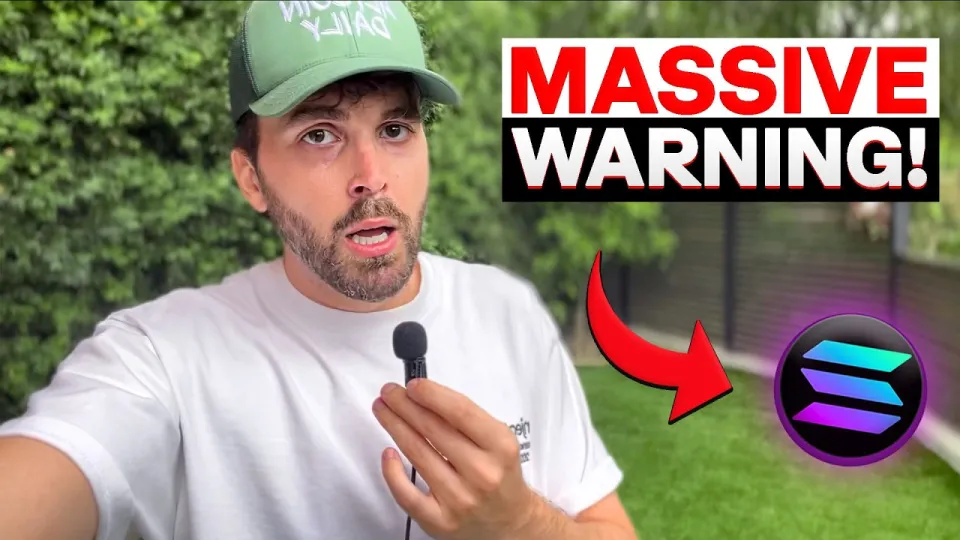
Video: My MASSIVE Warning To Crypto Holders
Want articles like this for your own video to promote it on YouTube and Google? Order them through the Telegram bot @sat_sit_bot. The bot writes and publishes the articles itself (with your YouTube video embedded) on popular topical websites (no ads). Try it free: 50 articles on us.
· based on the channel Altcoin Daily
The short answer for crypto holders is that the biggest risks in 2026 are not the price chart but custody, regulation and platform dependency — where your coins sit and who controls access to them. The warning-style breakdown from Altcoin Daily frames this as a structural shift: institutions and regulators are tightening the environment around exchanges and custodians, and holders who never think about where their assets live are the ones most exposed. If you are evaluating a new venue, you can unlock the $500 deposit bonus on Weex to test the platform — but read the custody section below before you move size there.
What the crypto warning for holders actually says
The warning is about structure, not a price call: the market is being reshaped by institutional participation and regulatory pressure, and retail holders are downstream of those decisions. Altcoin Daily's host spends the segment on how access to coins, exchange conditions and the treatment of holders change as the industry matures — the practical message being that a holder's job is to control what they can control. That means knowing who holds the keys, which venue holds the assets, and what happens if a platform changes its rules overnight.
This is why the video lands as a warning rather than a forecast. It does not promise a crash or a rally; it argues that complacency about infrastructure is the expensive mistake. Holders who treat an exchange balance as a wallet are the audience being addressed.
Custody is the part of crypto risk you can actually fix
Self-custody removes platform risk but adds key-management risk, and the correct split depends on how often you trade. A workable structure for most long-term holders:
- Keep only working capital on exchanges — roughly what you plan to trade or stake in the next few months.
- Move the long-term core to a hardware wallet with a seed phrase stored offline in at least two separate physical locations.
- Test the recovery process with a small amount before trusting the setup with the full balance.
- Treat any new venue as a trial: deposit small, withdraw once to confirm the process works, then scale.
- Review the split quarterly, because a portfolio that grew 3x has 3x the exposure on whatever venue holds it.
The warning in the video is not that exchanges are unsafe by definition — it is that holders rarely audit their own setup until something forces them to.
Regulation and institutional pressure reshape access, not survival
Regulatory pressure changes how holders reach coins: which venues serve which jurisdictions, what documentation is required, and how quickly rules can change. Institutional participation accelerates that, because large players bring compliance expectations that smaller platforms must match or exit. For a holder, the practical consequence is that access can be withdrawn faster than price can fall — an account restriction or a regional change can lock you out at the worst moment.
That is the argument behind holding assets you can move yourself. It also explains the recurring audience view that coins which do not depend on any single regulator or intermediary deserve extra weight in a long-term portfolio. The point is not that rules are bad; it is that rules are a variable you cannot control, so your setup should not break when they change.
Exchange incentives and the questions holders keep asking
The video description promotes two sign-up offers: the Weex deposit bonus and a Bitunix registration bonus marketed as no-KYC. Both are acquisition incentives, and the correct way to read them is as a discount on trying a platform, not as a reason to concentrate assets there. A bonus worth a few hundred dollars is trivial against the risk of parking a full portfolio on a venue you have not tested.
Viewers repeatedly raise adjacent doubts: whether mainstream brokerage-style apps are acceptable for holding coins, how lending and yield products on exchanges should be treated, and whether a token associated with a lending protocol carries the same risk as the protocol itself. The general rule holds across all three — the yield and the convenience are compensation for risk you are taking on, and the token is not the same thing as the platform.
Why 'the biggest risk is not owning crypto' is only half the argument
A large share of the audience pushes back on warning content with the view that the real risk is staying out of the market entirely. That is a defensible position for a long horizon: missing an entire asset class is a bigger error than a bad entry. But it only works if the position survives — an investor forced to sell during a platform failure or a regulatory freeze has effectively been out of the market anyway.
So the two views combine rather than conflict: own the asset, but own it in a form that cannot be taken away by a single counterparty's decision. Exposure and custody are separate decisions, and the warning is aimed squarely at the second one.
Macro shocks that sit outside the crypto thesis
War and energy shortages are legitimate risks that no custody setup solves, and they hit crypto the same way they hit every risk asset — through liquidity and correlation. In a broad risk-off move, coins sell off with equities regardless of how well they are secured. The honest framing is that self-custody protects you from platform failure, not from market drawdowns, and holders should size positions so that a severe macro shock does not force a sale.
All the links from the video
- Weex $500 deposit bonus: https://www.weex.com/events/welcome-event?vipCode=oz5p&qrType=activity
- Bitunix registration bonus (no KYC): https://www.bitunix.com/register?vipCode=AltcoinDaily
The takeaway for crypto holders
The warning is best read as a checklist rather than a prediction: know where your coins are held, test every new venue with a small amount, keep the long-term core in self-custody, and treat sign-up bonuses as trial discounts rather than reasons to concentrate risk. Altcoin Daily's breakdown is a useful prompt to audit your own setup before the market forces the question. If you want to test a new platform with a smaller commitment, you can claim the Weex deposit bonus and withdraw once to confirm the process works before scaling up.
Key takeaways
- The video is a warning-style breakdown from Altcoin Daily aimed at long-term crypto holders, not traders.
- The core argument: regulatory and institutional pressure is reshaping how holders store and access coins, not whether crypto survives.
- Custody is the practical takeaway — coins on exchanges carry platform risk that self-custody does not.
- The video description promotes exchange sign-up bonuses via Weex and Bitunix, so viewers should weigh incentives against platform risk.
- Audience reaction splits between 'biggest risk is not owning crypto' and fears of war, energy shortages and macro shocks.
Questions & answers
Is it safe to keep crypto on an exchange in 2026?
It is a trade-off, not a yes-or-no. Exchange balances are exposed to platform, regulatory and operational risk, while self-custody is exposed to key-management mistakes. Most long-term holders keep only working capital on exchanges and move the core to a hardware wallet with a tested backup.
Are mainstream brokerage apps suitable for holding crypto?
They are convenient but usually give you a claim on the platform rather than direct control of the asset, and withdrawal options can be limited. If you use one, treat it as a trading venue and keep the long-term position somewhere you can move yourself.
What should I check before claiming an exchange sign-up bonus?
Confirm the deposit and turnover conditions, whether withdrawals work in your region, and how much of your portfolio the bonus would tempt you to move. Deposit a small amount first and complete one withdrawal before scaling up.
Does self-custody protect me from a market crash?
No. Self-custody protects against platform failure and access restrictions, not against price drawdowns or macro shocks such as war and energy crises. Position sizing is what protects you in a broad risk-off move.
Source: My MASSIVE Warning To Crypto Holders · Markdown version